
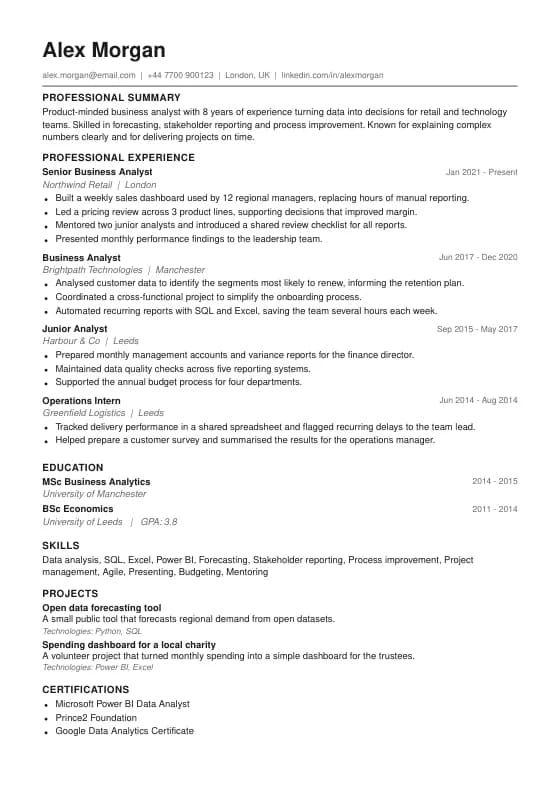
ATS Classic
Plain single column that every applicant tracking system reads cleanly.
Best for: Any role, Online portals
ATS excellentUse this template
A chef is hired on three counts: the food, the kitchen and the cost. Head chefs and owners look for the cuisines and venues you have worked in, the size of the teams you ran, and whether you can control food cost and meet hygiene standards.
Paste a chef job posting and get a tailored resume in about 30 seconds.
Tailor my resume freeThese are illustrative. Swap in your own real details, keep it to three or four lines, and make every claim one you can back up.
Sous chef
Sous chef with six years in modern European restaurants, running a team of eight during service for up to 180 covers. Strong in menu costing, ordering and training, and committed to HACCP and allergen standards. Looking to step up to head chef.
Line cook
Reliable line cook with three years on grill and sauté in a high-volume bistro. Quick, consistent and clean, comfortable with prep lists, mise en place and allergen procedures. Holds a food hygiene certificate.
Sous Chef
Example Restaurant · Feb 2020 to present
A sample only. The figures are illustrative, so replace them with your own real ones and never copy numbers you cannot support.
Only list skills you genuinely have, and put the ones the job posting asks for first.
Requirements and names differ by country and employer. List only what you actually hold, with the year or expiry where relevant.
A head chef reading a resume wants to know where you have trained, what stations you can run, what size of service you can handle and whether you are clean and consistent. Because kitchens are small worlds, the names and styles of the venues you list carry a lot of weight, so give them in full with the cuisine and approximate covers.
Progression is a strong signal. Moving from commis to chef de partie to sous chef within a venue, or being asked to lead a section, shows trust. If you were promoted, show the dates of each step as separate lines rather than hiding them in one long entry.
Chefs are judged on output and cost. Quote covers per service, number of staff you supervised, and your section’s responsibilities. If you contributed to cost control, mention ordering, portioning, wastage reduction or food-cost percentages you helped hit. Even a modest improvement stated honestly is more persuasive than general claims about being organised.
Compliance is a hiring filter. Food hygiene certification, allergen management, temperature logs and inspection results all signal that you will not put the business at risk. Mention the systems you have worked within, such as HACCP, and any inspection ratings in kitchens you ran.
Creative contribution should be concrete: dishes you developed, specials you wrote, seasonal menu changes you led. A short note on why a dish worked, whether it sold well or reduced waste, shows commercial thinking as well as skill.
Training matters because kitchens depend on teams. If you trained apprentices or junior cooks, say how many and on what. Finally, check that your resume matches the style of the restaurant you are applying to: a fine-dining kitchen expects precision and technique, while a busy bistro expects speed and consistency. Keep it to one page unless you are applying for head chef roles with a long record.
Use the exact wording from the job description where it is true for you. These terms come up often in this field:
Start with a strong verb, say what you did, and finish with the result. Fill in your real numbers. If you do not have a number, describe what changed instead.
Want to see how well your CV matches a posting? Try the free ATS resume checker, or let the CV optimizer do the rewriting for you.
One page for line cooks, up to two for head chefs with long histories. Open with a summary and venue-level experience, and keep formatting clean.
Reference the restaurant's menu or style specifically, then add one example of improving a dish, a process or a cost figure. Need a starting point? The cover letter generator writes a draft from your CV and the job posting.
Plain single column that every applicant tracking system reads cleanly.
Best for: Any role, Online portals
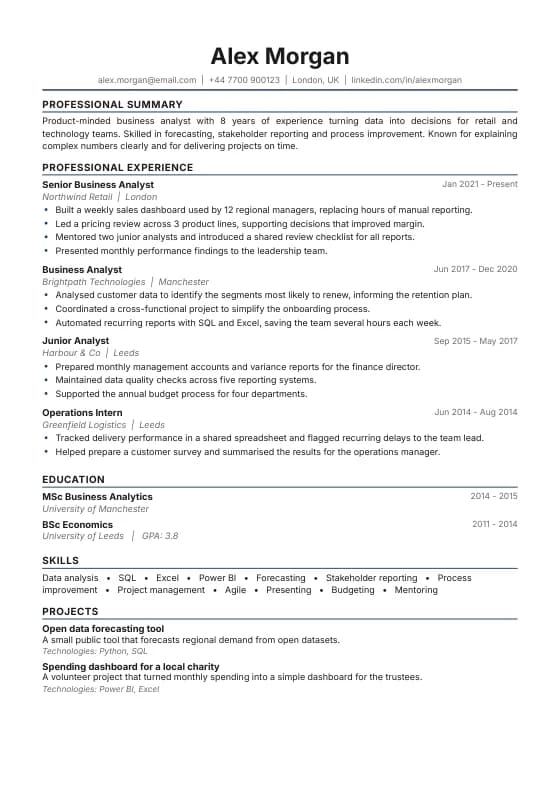
Centred header with a navy rule. Safe for every industry.
Best for: Any role
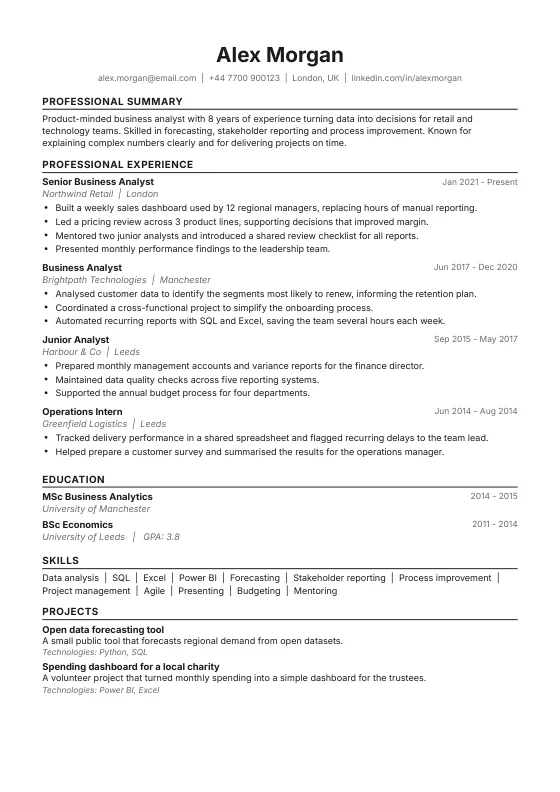
Centred header with ruled sections. Neutral and parser-safe.
Best for: Any role, Corporate
Cuisine, venues, brigade size, covers, cost control results, hygiene certifications and any menu development work.
Lead with leadership: team size, covers, P&L or food cost responsibility, menu ownership and training outcomes.
List the last 10 to 15 years in detail and compress older roles. Include notable venues.
Not required, but a link to a simple gallery or social profile can help if the photos are professional.
One page for most, two for senior chefs with extensive careers.