
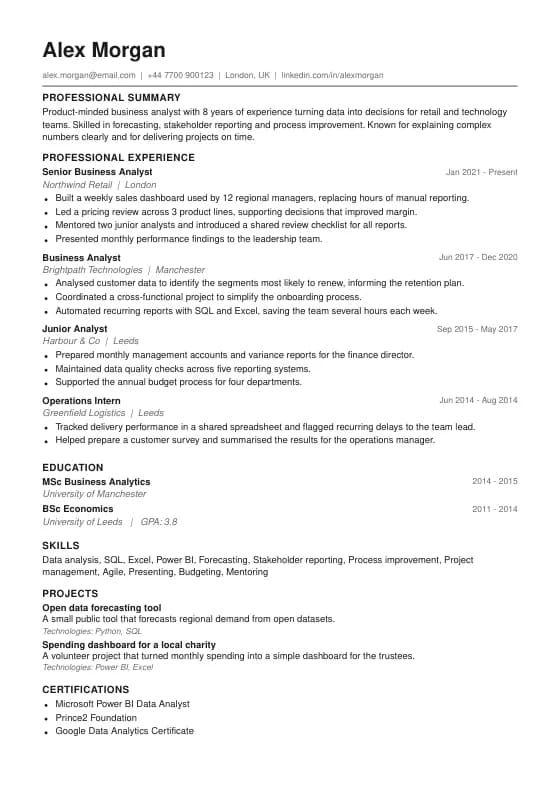
ATS Classic
Plain single column that every applicant tracking system reads cleanly.
Best for: Any role, Online portals
ATS excellentUse this template
Bar managers hire on three things: how fast and consistent you are behind the bar, how well you know your drinks, and whether guests like you. Your resume should make each of those visible, ideally with covers per night, bar sales or the venue type you have worked in.
Paste a bartender job posting and get a tailored resume in about 30 seconds.
Tailor my resume freeThese are illustrative. Swap in your own real details, keep it to three or four lines, and make every claim one you can back up.
Cocktail bartender
Craft cocktail bartender with four years in a 120-seat bar serving up to 300 guests on a Saturday. Confident across classics and seasonal menus, strong at upselling premium spirits, and trained in responsible service. Fluent in English and Spanish.
Pub and high-volume
Quick, friendly bartender with three years in a busy city pub. Comfortable on taps, till and cellar duties, balanced tills, and known for remembering regulars. Available for late nights and weekends.
Bartender
Example Cocktail Bar · May 2021 to present
A sample only. The figures are illustrative, so replace them with your own real ones and never copy numbers you cannot support.
Only list skills you genuinely have, and put the ones the job posting asks for first.
Requirements and names differ by country and employer. List only what you actually hold, with the year or expiry where relevant.
A bar manager hiring a bartender is balancing three things: speed, consistency and the atmosphere you create. A technically skilled bartender who is slow or unfriendly slows the whole bar down, while a charming one who pours inaccurately costs money. The resume therefore needs to hint at all three: venue type and volume for speed, drinks knowledge for quality, and guest rapport for atmosphere.
Venue type is the quickest way to place you. A neighbourhood pub, a high-end cocktail bar, a hotel lounge and a nightclub need different skills. Name the venue style, roughly how busy it gets, and whether you worked the bar alone or as part of a team. A manager who sees a similar venue to their own will read the rest of your resume with much more interest.
Rather than listing the word mixology, show what you know: classic cocktails you can make without a recipe, spirits categories you can talk about, beers and wines you have recommended. If you helped build a menu, rotated seasonal drinks, or ran a tasting or training session, say so. Menu contribution shows creativity and understanding of cost.
Commercial awareness is a differentiator that many bartenders omit. Mention stock rotation, ordering, wastage control, pouring accuracy, upselling premium spirits, and balancing the till at close. Bar managers care about margins, and a candidate who talks about cost and sales as well as drinks stands out.
Responsible service is non-negotiable. List your licensing or responsible-alcohol training, checking ID, and your experience refusing service politely. Bars take legal risk seriously, and a bartender who handles difficult guests calmly is an asset.
Because bars hire on rotas, state which nights and hours you can work, including late finishes and weekends. Keep the layout clean and readable rather than themed to the venue, mention any languages for tourist-heavy areas, and prepare to talk through one or two signature drinks in the interview, as many managers will ask for a short practical test as well.
Use the exact wording from the job description where it is true for you. These terms come up often in this field:
Start with a strong verb, say what you did, and finish with the result. Fill in your real numbers. If you do not have a number, describe what changed instead.
Want to see how well your CV matches a posting? Try the free ATS resume checker, or let the CV optimizer do the rewriting for you.
One page. Open with a summary and a skills block, then experience with the venue type and numbers. Plain, single-column formatting keeps it readable for both bar managers and hiring software.
Show personality while staying professional. Name the venue, mention something specific on its menu, and give one example of turning around a difficult guest or busy rush. Need a starting point? The cover letter generator writes a draft from your CV and the job posting.
Plain single column that every applicant tracking system reads cleanly.
Best for: Any role, Online portals
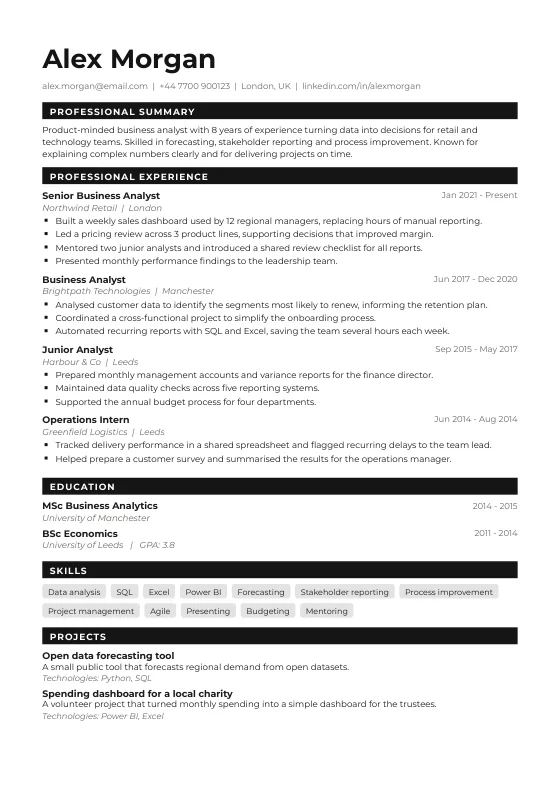
Filled section bars and a big accent name. Hard to miss.
Best for: Sales, Events, Retail
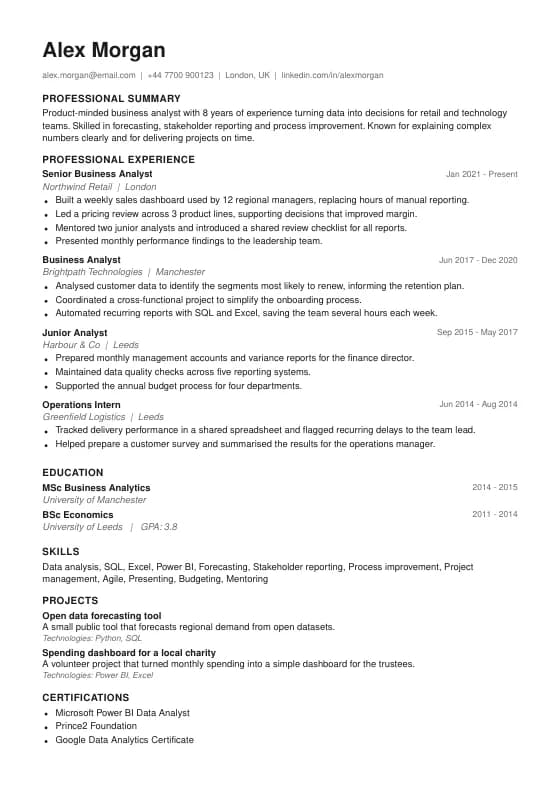
No rules, no colour, no fuss. Just your content.
Best for: Any role, Trades, Hospitality
Drink knowledge, speed, POS and cash handling, stock control, responsible service and guest rapport. Add specifics like cocktail menu work if relevant.
Not always, but responsible-service or licensing training is often required or preferred. List it clearly with the country or region it applies to.
Use hospitality or customer service experience, mention any bar-back or event work, and highlight responsible-service training, speed and willingness to learn.
Not usually. Use bar sales, covers and menu contributions instead, which show business value.
One page for most bartenders.