
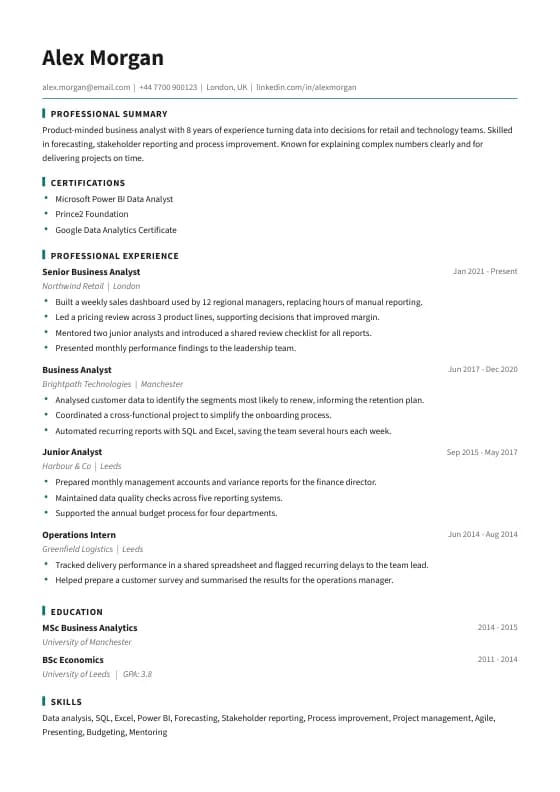
Clinical
Certifications up top. Calm teal for healthcare roles.
Best for: Nursing, Medicine, Allied health
ATS excellentUse this template
Families and care agencies hire caregivers they can trust with someone vulnerable. The resume should show reliability and compassion through specifics: the needs you supported, the routines you managed and the training you hold.
Paste a caregiver job posting and get a tailored resume in about 30 seconds.
Tailor my resume freeThese are illustrative. Swap in your own real details, keep it to three or four lines, and make every claim one you can back up.
Home care
Compassionate caregiver with five years providing personal care, meal preparation and companionship to older adults at home. Trained in safe moving and handling, medication reminders and dementia care, with warm references from long-term families.
Care home
Dependable care assistant with three years in a 40-bed residential home. Skilled in daily living support, observation and clear shift handovers, with first aid and safeguarding training.
Home Caregiver
Example Home Care · Apr 2020 to present
A sample only. The figures are illustrative, so replace them with your own real ones and never copy numbers you cannot support.
Only list skills you genuinely have, and put the ones the job posting asks for first.
Requirements and names differ by country and employer. List only what you actually hold, with the year or expiry where relevant.
A family looking for a caregiver is asking whether they can trust this person with someone they love. An agency is asking whether they can place you without risk. Both read your resume for stability, relevant experience and training, and both will contact references. The best caregiver resumes make those answers easy to find.
Describe the people you have cared for in general terms: older adults, people with dementia, people with physical disabilities, people recovering after surgery or receiving palliative care. This tells the reader whether your experience matches their situation. Protect privacy by never naming clients, but be specific about needs and routines you supported.
List personal care tasks plainly and respectfully: washing, dressing, toileting, continence care, feeding, mobility assistance and transfers. Add equipment you have used, such as hoists, slings, wheelchairs and walking aids, and mention moving and handling training. These are the tasks families worry about most.
Do not overlook the quieter skills. Meal planning around dietary needs, medication reminders within your role, keeping daily records, spotting changes in health, and communicating with nurses, therapists and relatives are core parts of good care. Companionship and emotional support also matter, particularly for isolated clients.
Long placements are the strongest evidence of reliability. If you cared for one client for years, state the duration. Mention that you can work nights, weekends or live-in shifts if that is the case, and that you have your own transport if the job requires it.
Training and boundaries show professionalism. Safeguarding awareness, first aid, dementia awareness and medication awareness are valued, and so is understanding where your role ends and clinical responsibility begins. Finish with references available on request and keep the language warm but concrete, avoiding clichés such as caring and compassionate unless backed by an example.
Use the exact wording from the job description where it is true for you. These terms come up often in this field:
Start with a strong verb, say what you did, and finish with the result. Fill in your real numbers. If you do not have a number, describe what changed instead.
Want to see how well your CV matches a posting? Try the free ATS resume checker, or let the CV optimizer do the rewriting for you.
One page, clean and warm in tone. Show qualifications and client types early, and keep formatting plain.
Speak to the human side. Mention why you care for people, a specific experience, and your availability and references. Need a starting point? The cover letter generator writes a draft from your CV and the job posting.
Certifications up top. Calm teal for healthcare roles.
Best for: Nursing, Medicine, Allied health
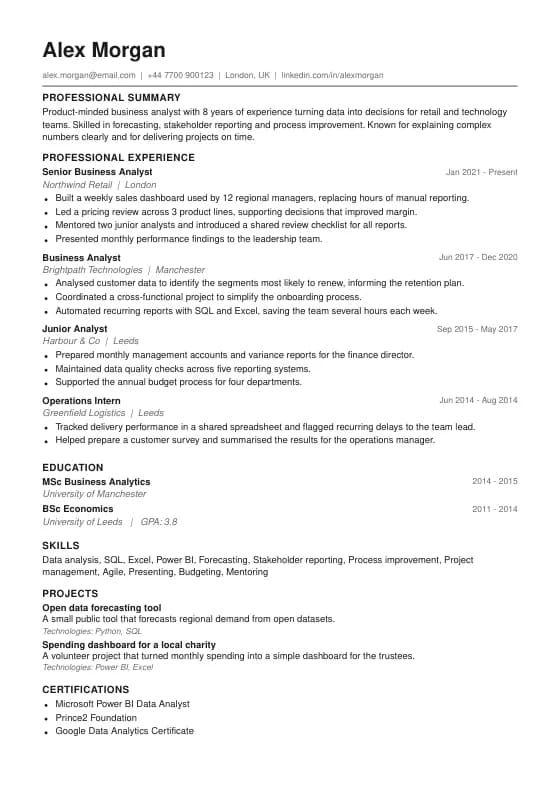
Plain single column that every applicant tracking system reads cleanly.
Best for: Any role, Online portals
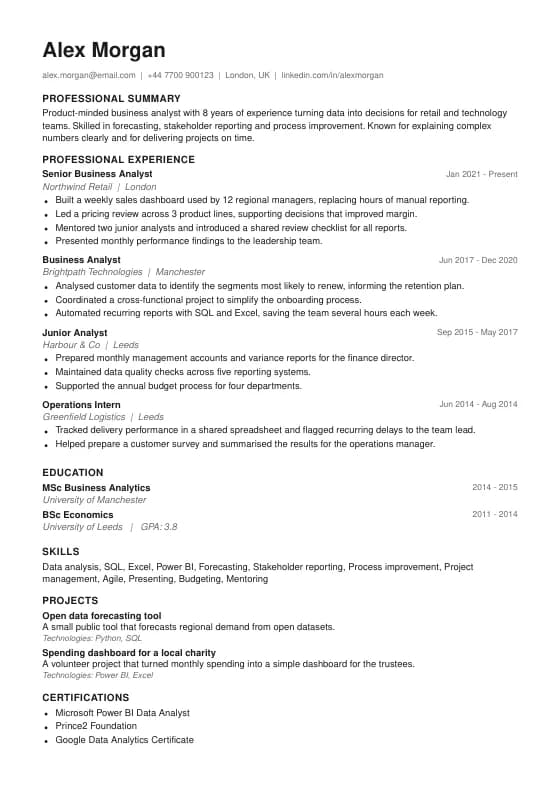
No rules, no colour, no fuss. Just your content.
Best for: Any role, Trades, Hospitality
Personal care, moving and handling, medication prompts, dementia care, record keeping and strong communication.
Often yes. Show reliability, empathy, any family caring experience and willingness to complete training.
Yes, if it was long and substantial. Describe the needs you supported and routines you managed.
Strongly recommended. Mention they are available and have them ready.
One page. Lead with qualifications and the client groups you have supported, then a short list of placements with their duration, because long placements are your strongest proof of reliability.
List it as a role if it was substantial: the needs you supported, the daily routines you managed, how long it lasted and any training you took. Employers value it when it is described as concretely as paid work.
A recognised care qualification, safeguarding, moving and handling, first aid and, where relevant, dementia or medication-awareness training. Requirements differ by country, so check the agency's list and put matching items first.