
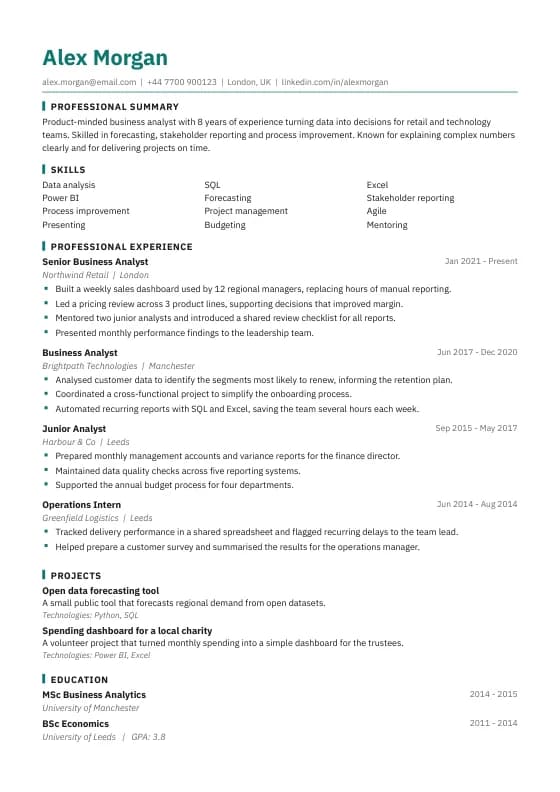
Engineer
Skills near the top, columns for tools, square bullets.
Best for: Software, DevOps, Hardware
ATS excellentUse this template
Hiring managers for engineering roles look for three things in the first scan: the stack you work in, the scale you have worked at, and what you improved. A good software engineer resume makes all three obvious in a few seconds.
Paste a software engineer job posting and get a tailored resume in about 30 seconds.
Tailor my resume freeReplace everything in [brackets] with your own details. Keep it to three or four lines and make every claim one you can back up.
Software engineer with [X] years of experience building and running [web / mobile / backend] systems in [languages]. Strong in [area, e.g. API design, performance, testing]. Most recently at [company], where I [one concrete result].
Only list skills you genuinely have, and put the ones the job posting asks for first.
Use the exact wording from the job description where it is true for you. These terms come up often in this field:
Start with a strong verb, say what you did, and finish with the result. Fill in your real numbers. If you do not have a number, describe what changed instead.
Skills near the top, columns for tools, square bullets.
Best for: Software, DevOps, Hardware
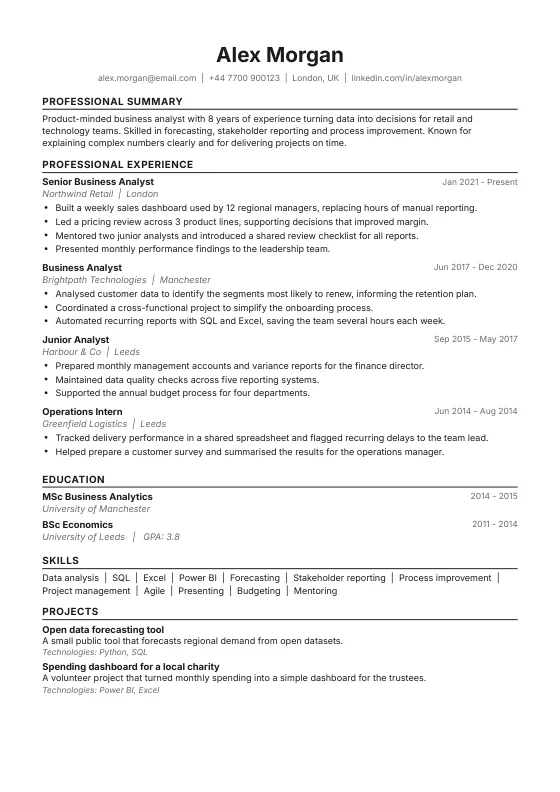
Centred header with ruled sections. Neutral and parser-safe.
Best for: Any role, Corporate
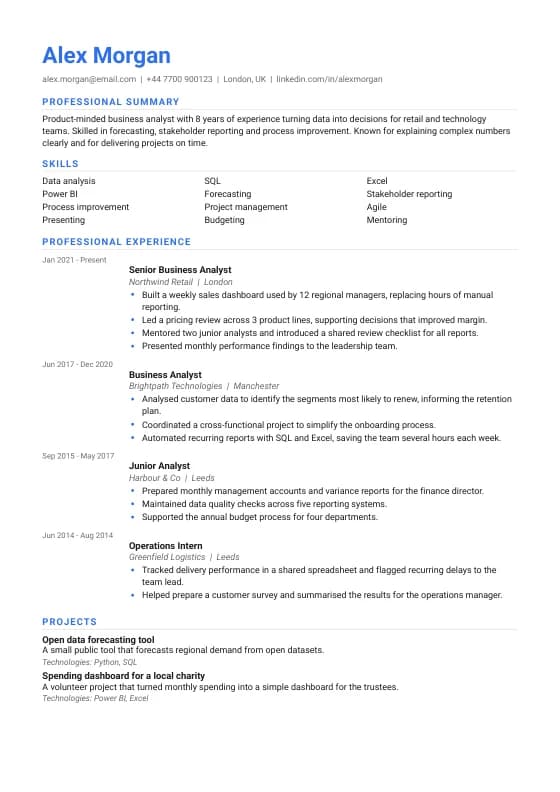
Dates in the margin, skill columns and projects up front.
Best for: Data science, Analytics, Research
One page for up to about ten years of experience. Two pages are acceptable for senior engineers with a lot of relevant history.
If they are relevant and you can say what they do and for whom, yes. They matter most early in your career or when changing specialisation.
No. List the ones you can use productively and that the role asks for. A long list reads as shallow.