
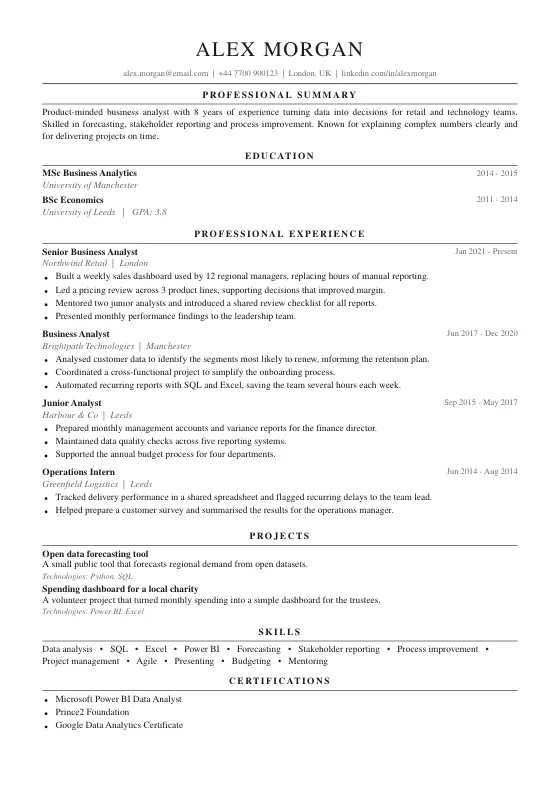
Ivy League
The classic university CV: centred, serif, education first, black and white.
Best for: Graduate school, Law, Finance, Consulting
ATS excellentUse this template
Traditional resumes look the way hiring committees expect them to: a centred name, a restrained serif typeface, thin rules between sections and no decoration. They put education early, which suits graduates and anyone applying to law, finance, consulting, policy or research roles.
The Ivy League style is not about prestige. It is about signalling that the content comes first. Dates sit on the right, headings are plain, and nothing competes with your experience.
These templates mix a few variations: Times and Garamond for a formal tone, Baskerville for something slightly warmer, and a margin-date layout for UK-style academic CVs.
Tailor my resume freeThe classic university CV: centred, serif, education first, black and white.
Best for: Graduate school, Law, Finance, Consulting
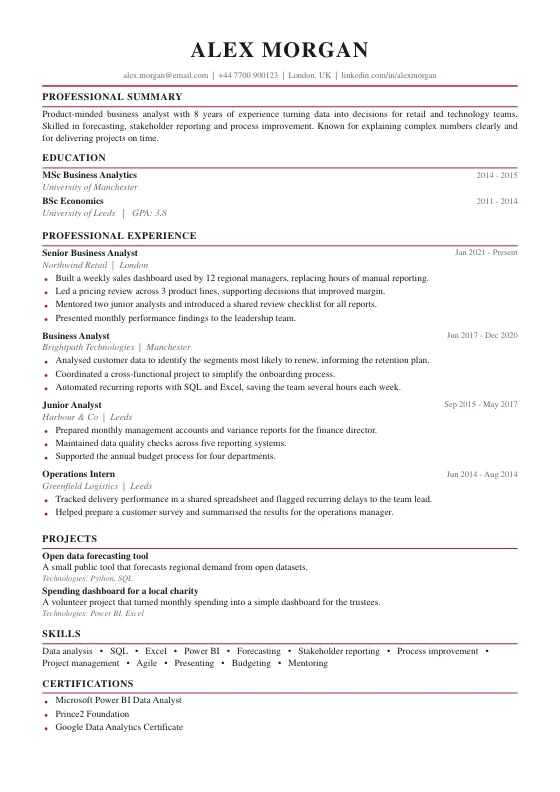
Crimson rules, Times type and education up front.
Best for: Graduates, Policy, Consulting
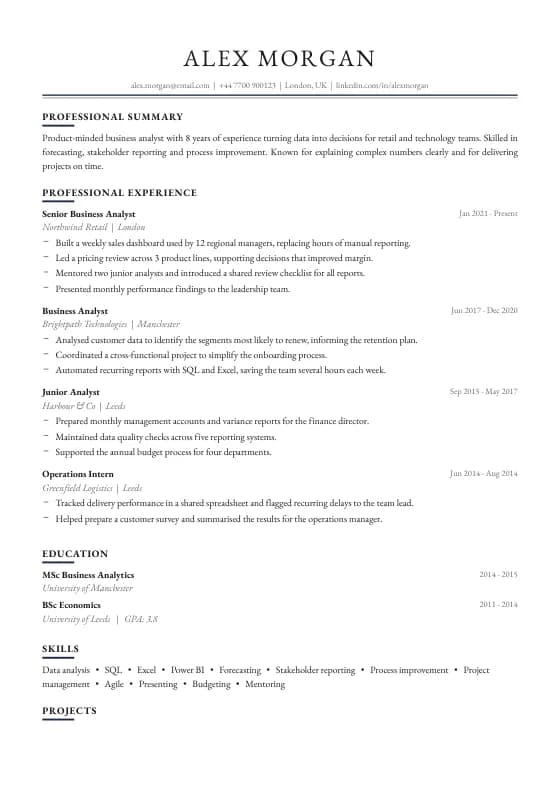
Garamond with a double rule. Refined and understated.
Best for: Academia, Publishing, Law
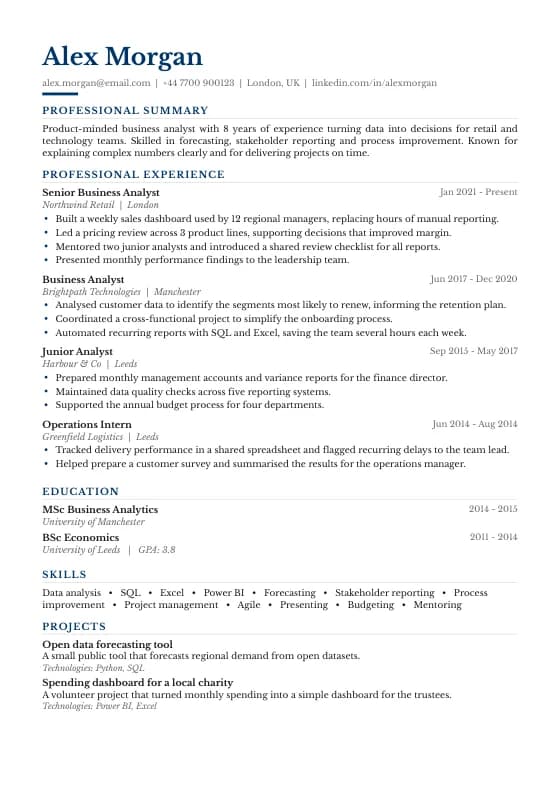
Navy name with a baskerville body and tidy accent headings.
Best for: Finance, Policy, Management
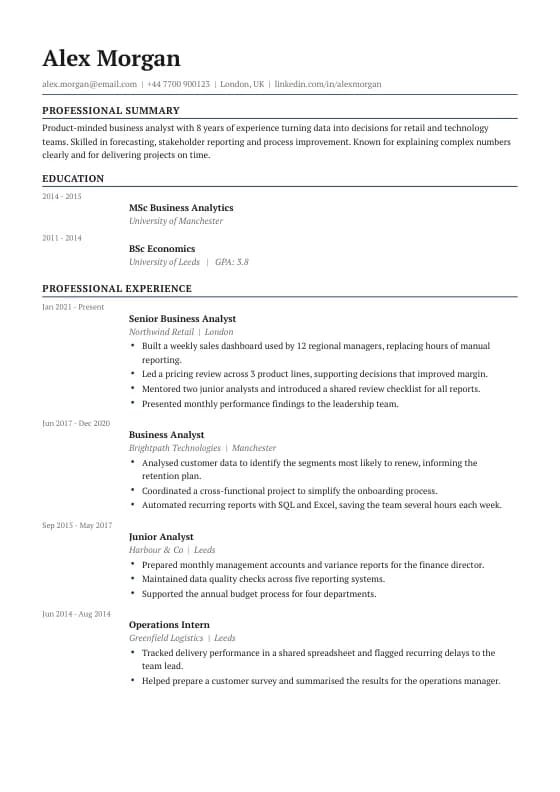
A UK-style CV with dates in the margin and education first.
Best for: UK applications, Graduates, Research
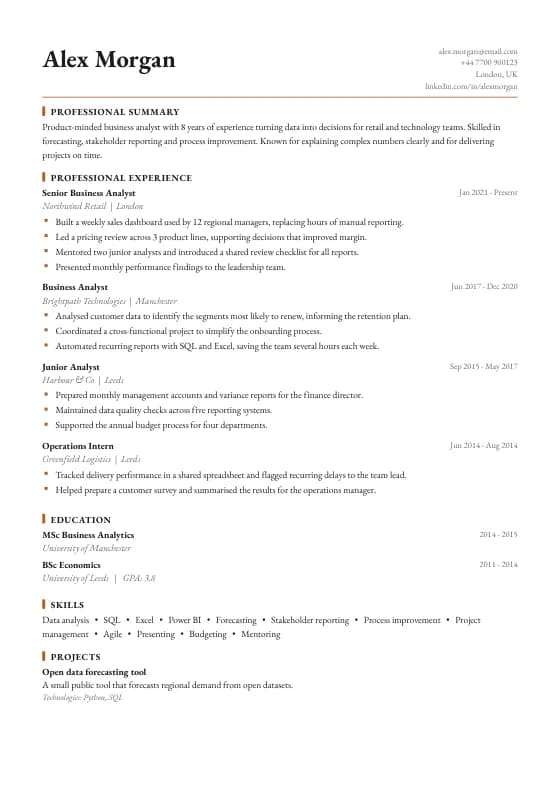
Orange accents on a clean, split header. Confident but classic.
Best for: Business, Engineering, Graduates
The Ivy League and Harvard templates: centred header, serif type, education first and thin rules. Oxford and Yale give the same structure with slightly different typography.
For conservative fields such as law, finance, consulting and academia, yes. It is also a safe default when you are unsure of the employer's culture.
If you are a student, recent graduate or applying to graduate school, yes. With several years of relevant experience, put experience first.
No. A resume is usually one or two pages. An academic CV can be much longer and includes publications and grants. See the academic templates for that.